


Some of the most spectacular features of Samuel Untermyer’s historic gardens are basking in glory again, a century after their heyday as one of the greatest gardens in America and fifteen years into an extraordinary restoration effort. Under the leadership of the Untermyer Gardens Conservancy and with support from the public, the treasures of this landscape are still being unearthed.
Situated on a slope above the Hudson River north of New York City, a magnificent Walled Garden welcomes visitors into this 43-acre landscape, a Yonkers municipal park that is free and open to the public. A pair of Sphinxes rest on marble columns above an amphitheater and crisscross-ing canals. The Temple of the Sky overlooks a Persian Pool that dazzles the eye with stone mosaics. The stunning Vista draws visitors down a staircase where Japanese Cedars and ancient Roman columns frame the river view. To the left, a Woodland Trail leads to further surprises, including a hilltop Temple of Love.
It’s almost overwhelming to imagine yet another grand garden being added to the current grounds. But this year, the Untermyer Gardens Conservancy is embarking on another major restoration project: the Color Gardens, a series of cascading terraces just north of the Vista.
The Untermyer Gardens Conservancy, founded in 2011 by Stephen F. Byrns, works in partnership with the City of Yonkers to restore, interpret, and enhance Untermyer Park and Gardens. The newest project follows numerous grand achievements in bringing the landscape back to its original splendor. The plan involves a land exchange with the neighboring St. John’s Riverside Hospital, and the relocation of a hospital parking lot that occupies part of the former Color Gardens. A network of support is helping to move the project forward.
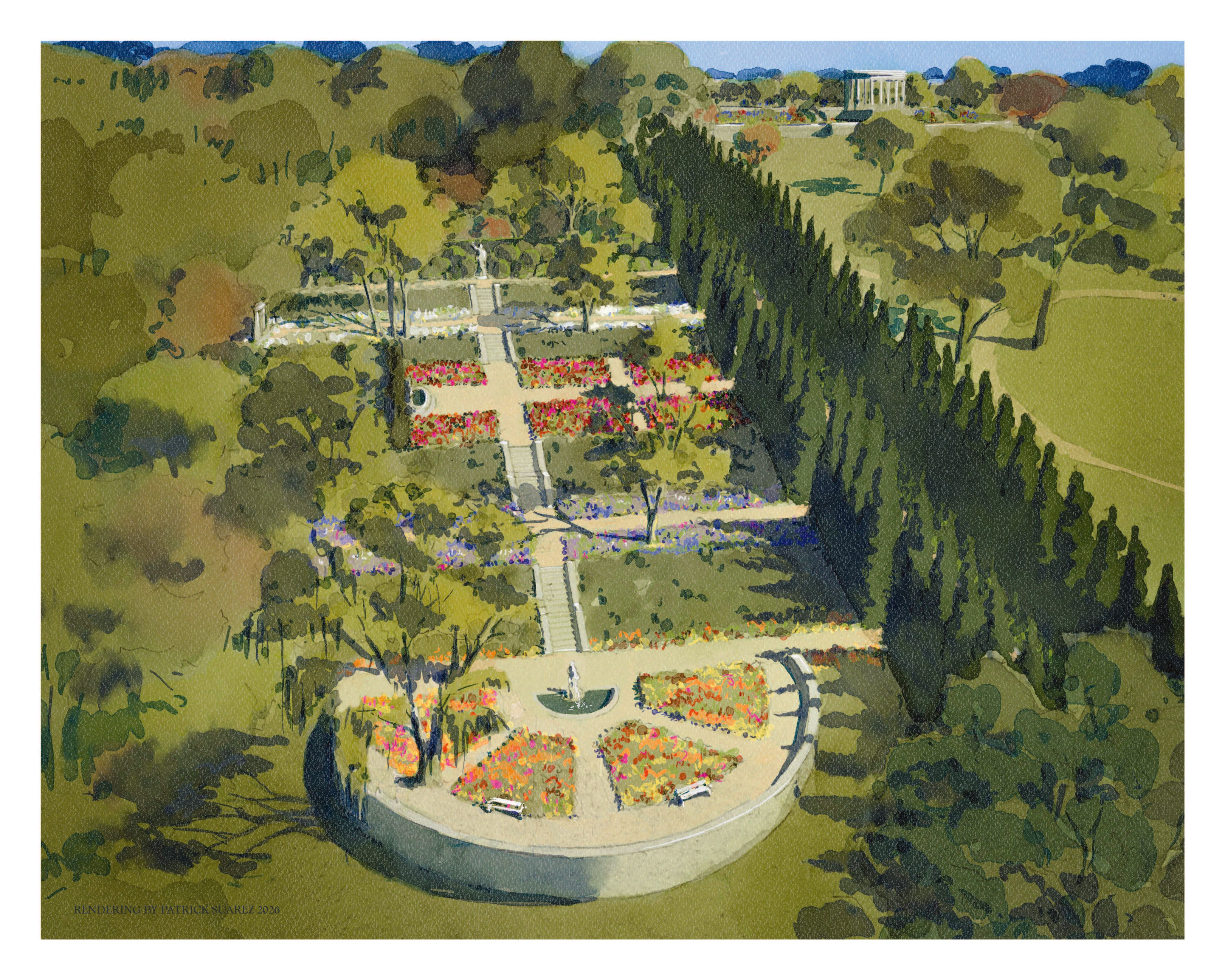
The Garden Conservancy’s Jean and John Greene Prize for Excellence in American Gardening will provide $45,000 toward the project, estimated to cost about $775,000. Sullivan and Cromwell LLP provided pro-bono legal support to prepare the land agreement, signed this year between St. John’s Riverside Hospital, the City of Yonkers, and the Untermyer Gardens Conservancy. Ferguson & Shamamian Architects created a rendering of the restored gardens. Barbara Israel, a leading garden antiques dealer and board member of the Untermyer Gardens Conservancy, is donating a 10-foot-tall marble statue of Caesar Augustus that will stand at the very top.
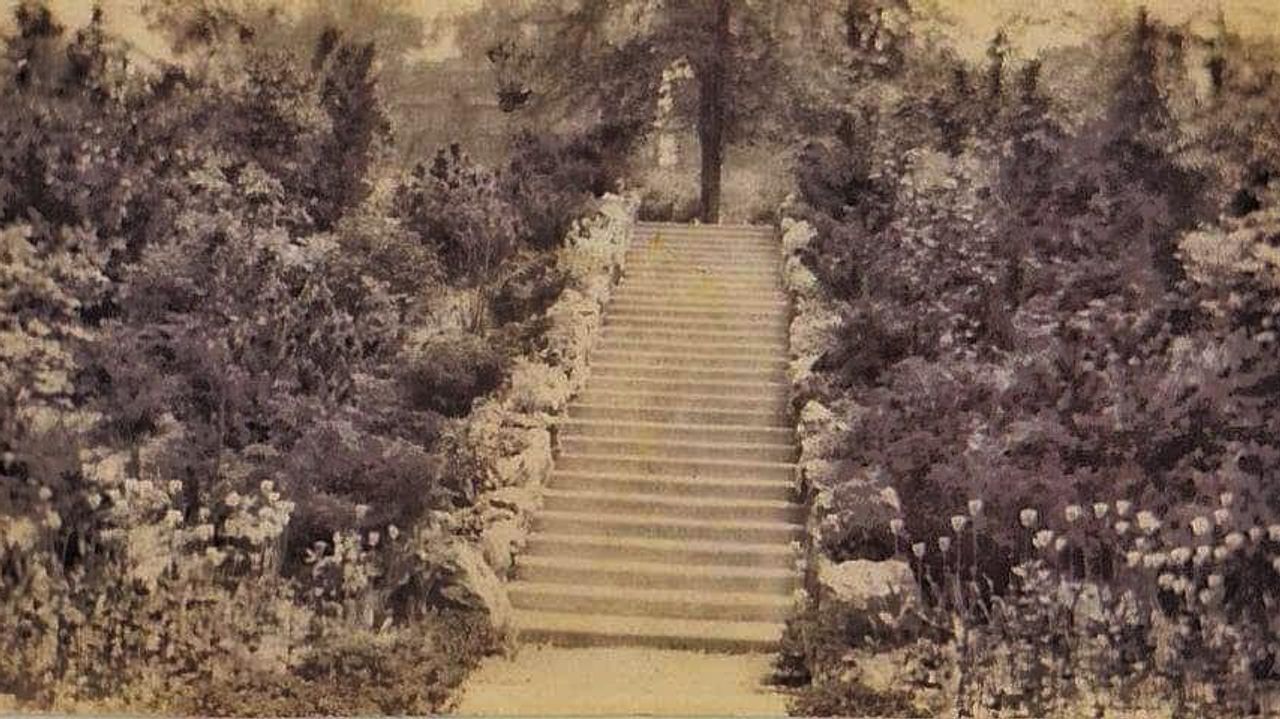
Once complete, the Color Gardens will offer a new way to experience the dramatic descent from the Walled Garden down toward the river. Imagine walking down the Vista steps and noticing the sound of trickling water; a fountain you can hear but not see, Byrns says. You step through one of the gaps in the stone wall and past the line of cedars. “Then you’re in a different world,” he says. You find yourself on one of the terraces, discovering the Blooming flower beds. A new view, framed in foliage, greets you as you look down the slope. The Color Gardens allow you to crisscross the Vista staircase, weaving your way down the hill.
Visitors to Untermyer love the fact that on every visit, they find something new, Byrns says. They discover the stunning Vista after strolling through the Walled Garden, entering a loggia, and finding a modest-si]e doorway that reveals the breathtaking view. The Color Gardens will add a whole new element of surprise.
Originally, the Color Gardens were six terraces: pink, blue, red, white, and yellow, with a delphinium garden at the base. The restoration by Timothy Tilghman, Head Gardener, envisions new color themes, incorporating contrasting hues for a more vibrant effect.
Today, the upper terraces are buried beneath pavement, overgrown vegetation, and a hospital parking lot. The top terrace, now under a road, is lost forever. The next is half present, with a road cutting through the north end. Below that, an overgrown lot hides a set of terrace steps and a decorative limestone arch, and next is a hospital parking area where another terrace was.
In 2027, the Untermyer Gardens Conservancy plans to relocate the parking spaces and reconnect the upper areas of the garden. It will also need to move the boundaries of the critically important deer fence, installed in 2011-2012 around the perimeter of the garden. Once those projects are complete, the hope is to begin rebuilding the Color Gardens in 2028.
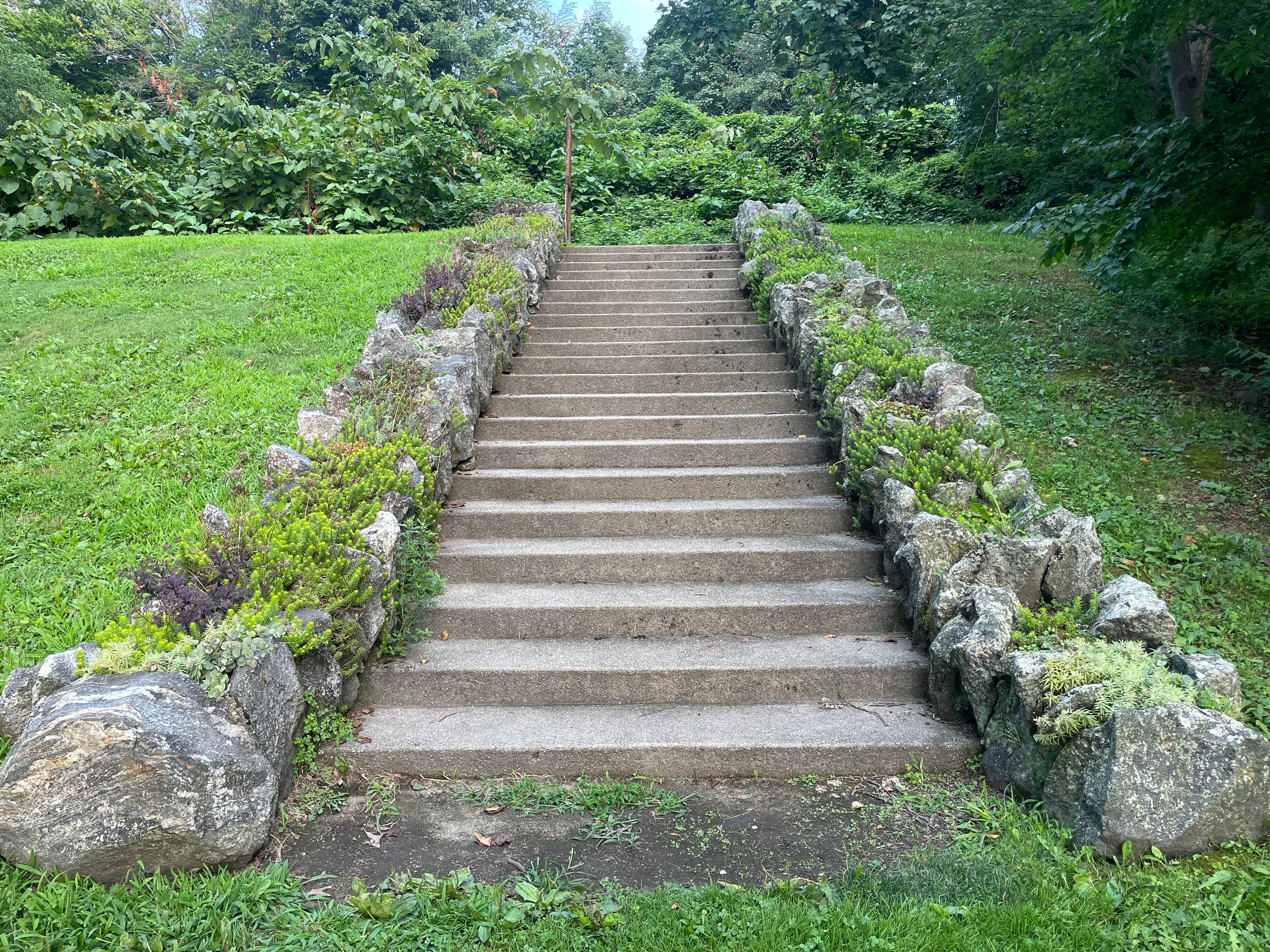
The two lower terraces hint at what’s to come. Above a semicircular lawn with traces of the old beds, a stairway is now restored, framed by low stone walls designed to serve as planters. They are filled with beautiful, bright green, yellow and purple sedums.